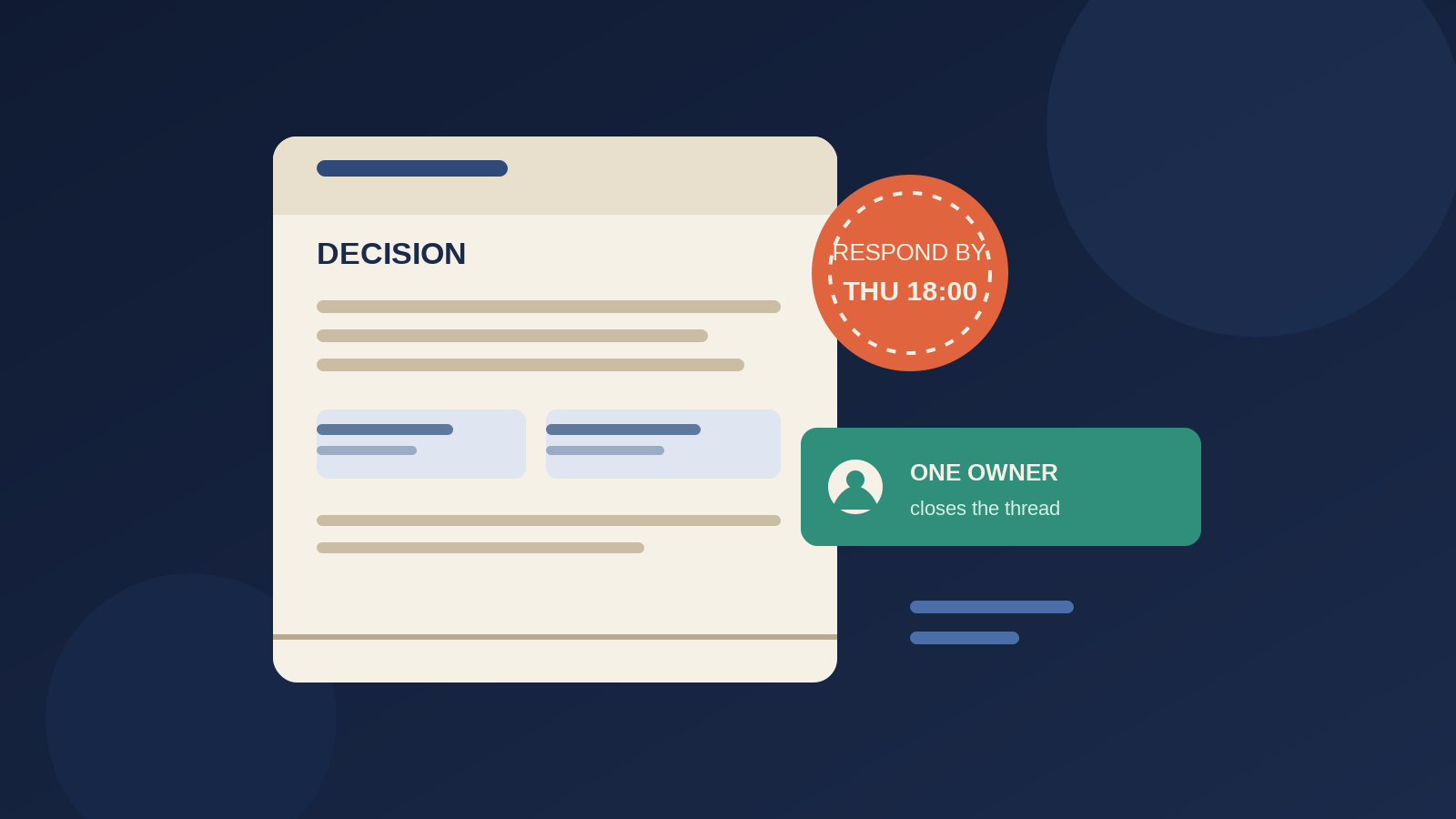
Give the starter task one result the reviewer can check. For a service coordinator, ask them to sort three sample requests using the team’s published categories. Give them the inputs and a place to send the result. Keep the real customer queue separate while they learn.
Choose the task by looking at work a new colleague will need to repeat. Would it help them to find a guide, use the tracker, ask an owner to check a decision, or record what they did? A starter task can expose those steps without depending on a long project or several other teammates.
Write what done looks like
Open the fictitious requests in the training folder. For each, choose a category and add a one-sentence reason. Flag one question about the guide before submitting. Post your answers on the training ticket. Avery will review them by Thursday at 15:00 UTC.
Give them access to one worked example and a link to the criteria. For an early review, ask whether each category matches the guide and whether the reason uses details from the request. If the guide is ambiguous, use that question in the review. The hire may have noticed an exception a longer-serving employee no longer sees.
GitLab’s onboarding handbook shows how a remote team can use a tracked issue to guide a hire through onboarding tasks and their first interactions. Your first assignment can live in that same visible workflow. If the due time changes, update it on the task. GitLab
Choose a result the reviewer can recognize in a few minutes
Name the action a new hire will need to repeat in their first real assignment. A service coordinator may classify incoming requests and identify who can approve an exception. Take a handful of fictional requests and give each one enough information for a decision. Include a routine case, an exception with a documented route, and a case that needs an additional fact. A reviewer can then see whether the hire used the guide and understood when to ask for help. Assign one person to respond to questions about the expected output.
Give the hire an example and a result format. They could add a label and a one-sentence reason to each sample request. Ask them to link to the guidance they used. A reviewer may be able to check one entry quickly and use it in a focused conversation. Make the exercise independent of live customer information and check the training environment before the hire starts. If one workspace is unexpectedly unavailable, the same cases can be opened from an approved practice document and completed with the same decision rules.
GitLab’s onboarding handbook describes leaving tracked work for remote hires to complete with help available. A shared issue or checklist can contain the exercise and its prerequisites. The goal for this small assignment should be visible before the employee opens a new tool. Tell them the deadline, who will review it, and when they should stop if they cannot find a rule. GitLab
Try the instructions with a plausible mistake
Suppose the sample includes a customer asking where an item is, but the request gives no order reference. A hire might assign it to shipping even though the guide says to use the intake route when no reference appears. A useful review can say “This shipment might belong with dispatch once an order is identified. For this exercise the intake route asks for the missing reference.” Point to the rule and give the hire another invented request to try. If the guide never explained what to do, update the instructions before blaming the reader for a wrong label.
Define how to handle ambiguity while the exercise is in progress. Let the hire record what they would ask the requester and what work they can still complete. They can finish a sample with a named item and leave a missing detail open. A check that treats every case as purely correct or wrong may hide their reasoning. Give feedback separately on the route, the reason, and the way they asked for help. When a starter task is timed, measure whether the instructions were clear enough to complete it and give the hire enough time to learn the new context.
Arrange follow-up in the way the group normally works
Ask a buddy or reviewer to check the finished work in the same channel where the hire sees tasks. Atlassian’s working-agreement exercise can help teams state how they communicate. Show the hire what an actionable question looks like in that channel. “I can open the order example, but the guide names two categories for this kind of exception. Should I use the incoming date or the promised date to choose?” gives a colleague a clear point to answer. Keep the reply with the work for later reference. Atlassian
After the review, choose a similar task that changes one condition. The hire can try another missing-reference case or identify an approval owner from a real guide without taking action on a live record. When the employer’s process allows live work, agree which step a colleague will review and what result the hire can complete alone. Make the change from practice to real work visible so nobody mistakes a training result for a customer decision.
Record which part of the starter exercise revealed a problem with the instructions. If each new person needs the same question answered, add that answer to the source guide and check the next exercise again. If the task was too broad to review, remove an extra deliverable or give separate owners to each step. Ask the next hire to start from the updated instructions and note the first question they still have.
Plan how help will arrive
Tell the hire how to ask for help before starting. Include the normal channel and the backup contact in a different time zone. Atlassian’s working-agreements exercise uses team discussions about how people collaborate. A starter task can give the new person an early chance to try those agreements. Atlassian
Keep the feedback on the artifact. “The third request needed the delivery exception because it named a lost item” is easier to apply next time than a general note about accuracy. After review, give the hire a similar live or supervised task only when the relevant permissions and procedures are in place. Record any improved guidance in the team’s own materials.
Ask about the task during the first-week feedback conversation while the assignment, access, and help requests are still fresh.