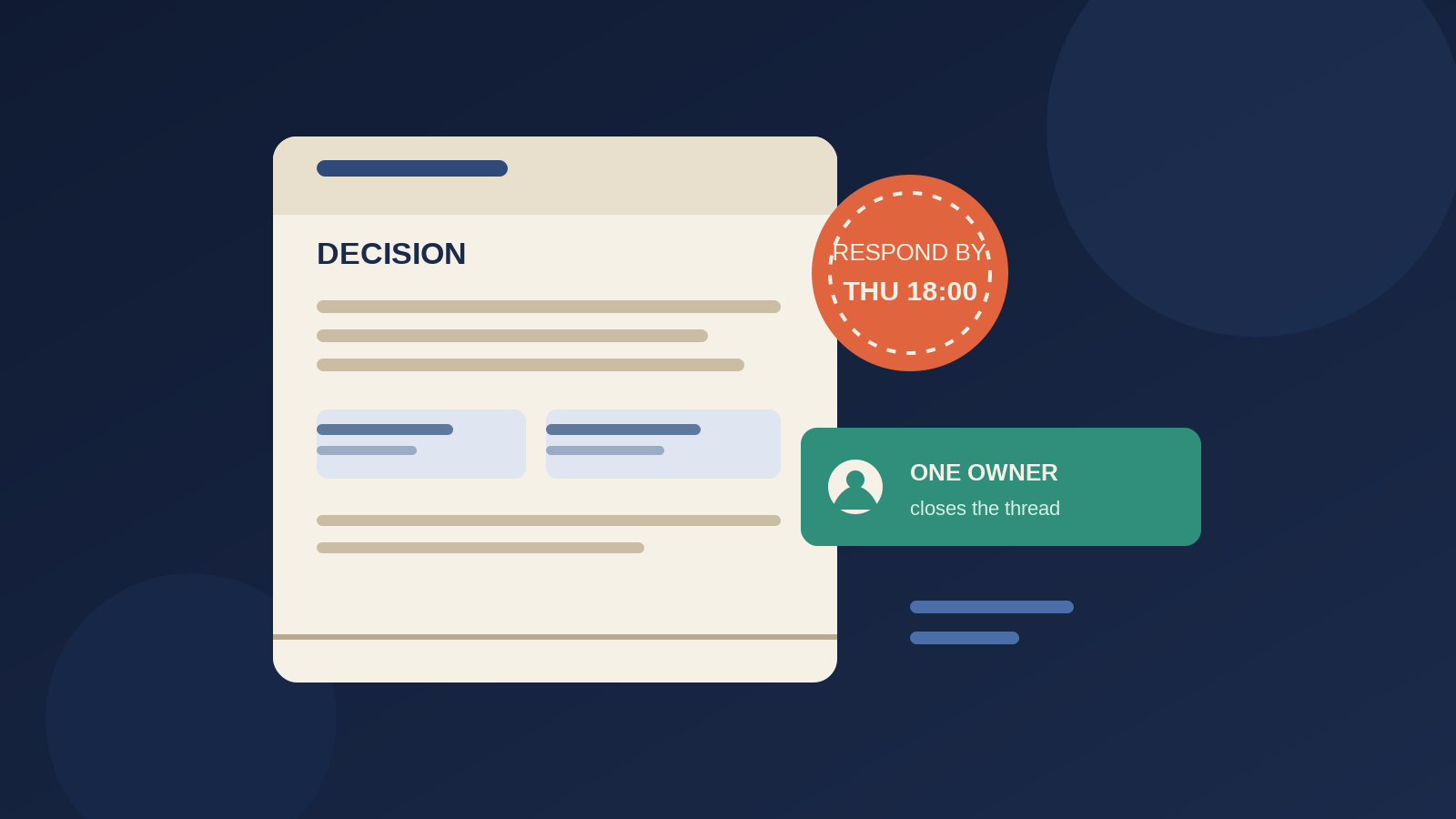
Tell the next person what they can do as soon as they open the handoff. Give the current state of the work, the next action, and a decision boundary. Keep the links in the task everyone can access.
Imagine a customer migration that can continue through a second shift. The first shift checked the source files and ran a dry run. Four accounts are missing a field that a customer needs to approve. The second shift can verify the draft output while the customer decides. It needs the dry-run results and the criteria for continuing.
Write one actionable handoff
Dry run completed at 16:20 UTC. The audit sheet is attached to the migration ticket. Start with the rows marked ready and compare their counts with the report. Leave the four rows marked pending until the account owner replies. If a ready count changes, add the finding to the ticket and call our scheduled incident contact.
Include the name of the next owner, then record when you will return or when ownership changes again. GitLab’s communication handbook encourages shared, written context for asynchronous teams. Leave the durable facts on the work item and use the usual channel to tell the next person it is ready to pick up. GitLab
Give the receiver an action and an authority boundary
Start with the exact work item and its present state. A colleague may know that a migration is underway and still need to see whether the last change was tested or committed. Write where the receiver can see the result and which action is ready for them. If the first shift had to stop during a test, include the last verified observation. A short note may say “The report now shows fourteen ready records. The last two in the hold section still need an account owner to answer.” At the time of transfer the receiver can compare the file and see if anything changed.
Name which action can proceed and which depends on another decision. For a sample vendor update, the receiver may prepare the report and check the count. They may have to wait before sending the change to a customer if an account detail remains open. Give them the approval source and a named backup. If their role cannot perform a step, describe who can perform it and how to reach that person. A handoff can still succeed if the receiver uses the review route and records what they saw. The field should say which results are checked rather than assuming a successful outcome for work that has yet to run.
GitLab’s communication guidance discusses documenting work and keeping decisions in shared issues and records. Use your team’s approved place for the work. Give the receiving person a link they can open from their normal role, verify that the document has the latest test name, and put the update where someone will see it before they act. A chat message can notify a shift while the task preserves the permissions and decision history. GitLab
Walk through an unexpected result
Imagine you passed twelve records to the next shift and a colleague opens the report to find thirteen. The extra record could have appeared after an approved update or through an input change you didn’t see. Ask the receiver to record the count they observed, the version and time, and which part of the work they paused. If the procedure allows them to continue with separately verified records, name those cases. If the count affects an irreversible update, give them the escalation person who can check it. The next colleague should see the result and the decision before they start again.
A similar problem can happen with a missing link. You might see the test report in a folder that the next shift cannot open. Before signing off, check with someone in the same access role or use the existing test permissions. If the file cannot be shared, write where a person with access can retrieve it and who should request a permitted copy. Leave enough context for another test from the approved inputs when resuming is necessary. A shared task can tell the reader what will remain pending while access is resolved.
Write the local date and time beside the handoff
For an urgent handoff, write the date, time, and relevant zone beside the action. IANA’s zone database tracks local clock offsets and changes to them. A fixed UTC handoff time can move relative to someone’s workday after an offset changes. Check the actual receiving group’s availability on the relevant date. If someone finishes just before the handoff, name the person in the next working block who will accept it. A recurring change to schedules deserves an update to the standing handoff agreement. Internet Assigned Numbers Authority
Ask the receiver to acknowledge what they can take. They might reply “I have the report and will check the ready count before 15:00 UTC. The owner approval is still pending.” If they find something missing, it will come up before the original author disappears for another day. Decide what happens when no acknowledgement arrives. You can check whether the assigned person is unavailable and use a known backup or record that the handoff remains open. After the work, ask which detail the receiver needed to reconstruct. Put that detail into the next note if it affects a real decision.
Make the deadline interpretable
Use a date and UTC time for a hard operational window, then add a named local time zone where it helps the receiving team. “At 09:00” is ambiguous across shifts. IANA maintains records of local offsets and daylight-saving changes, so look up the conversion for the actual handoff date. Tools based on named zones can adjust when offsets change. Internet Assigned Numbers Authority
If the receiver expects to hand off again, give them a place to add what happened and which condition remains open. For a repeating workflow, define what counts as acceptance. They might add a note with the verified row count and say which shift they are taking. A missing reply then has a known meaning in your process.
Before leaving, open the shared link in the same access role if you can. Files in a personal workspace, screenshots without timestamps, and ambiguous override instructions can consume most of the next shift. Share the permitted record through the team’s usual system and state any dependency the next person will have to wait for.
For a handoff that regularly stalls overnight, agree which messages should get a response before the next shift.