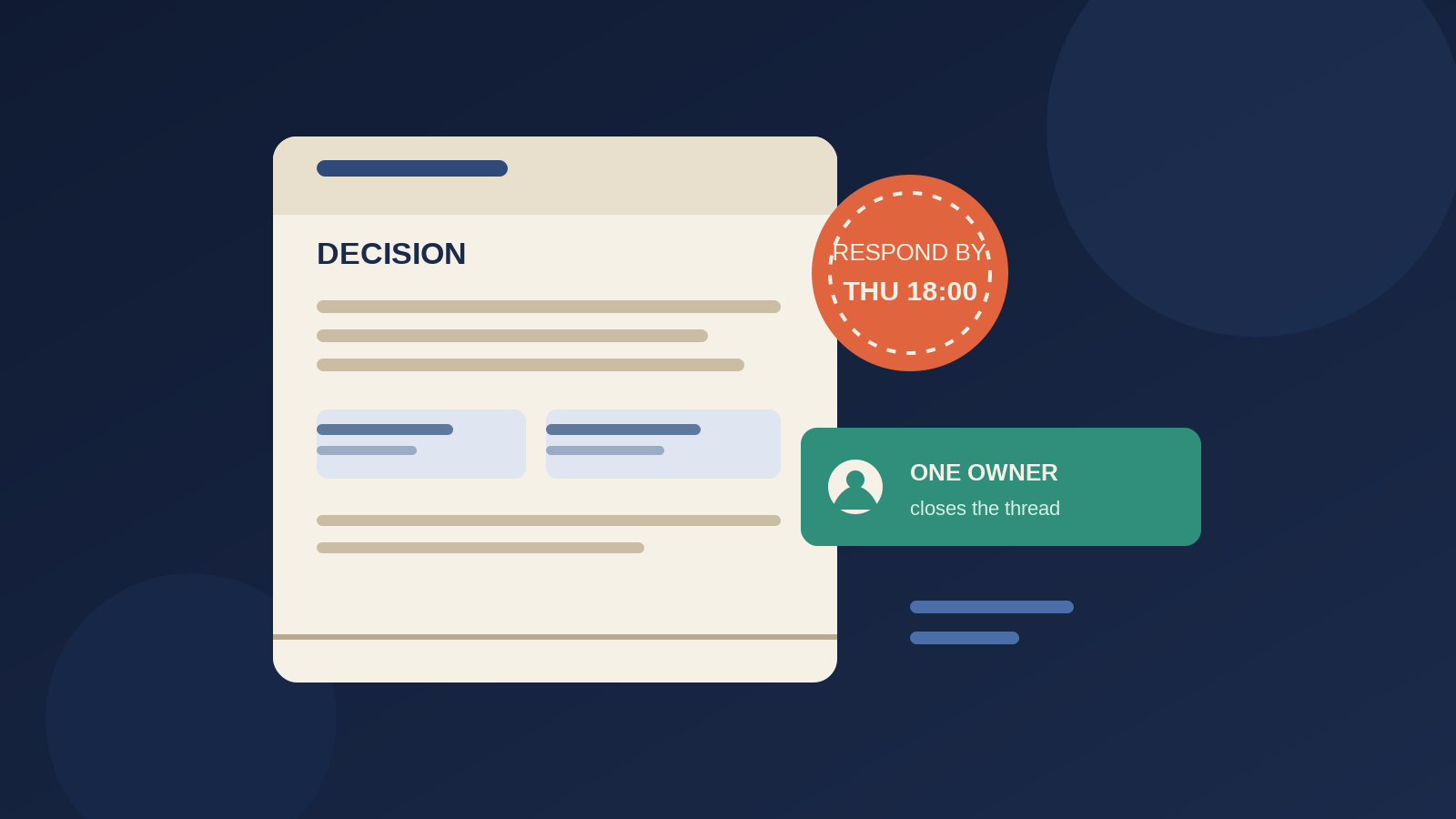
“Still working on the vendor import” can be an accurate update and leave everyone waiting. If another person can move the work forward, give them the object they need and a clear action. Put the request early enough that they can see it in the message preview.
Suppose a test import worked for most accounts and stopped on a set of records with missing country codes. An actionable post would tell the reader where to find the failed rows, what decision is needed, and when you will check again. Put the deadline and named responder in the message itself.
Please confirm by 14:00 UTC whether the import should leave the 23 missing-country records on hold. The test report is in our import ticket and the rows are in the exceptions tab. I have loaded the other test records. Priya, a reply of “hold” or the name of an approved default is enough for me to finish the dry run.
Put the durable information with the work
The work ticket can carry the report, the resolution, and the next action. Link the ticket from chat when someone needs a prompt. GitLab’s communication handbook describes using issues, merge requests, and handbook entries to make work and decisions available asynchronously. A summary that links to an artifact gives others more to work from than a separate message with scattered screenshots. GitLab
If nobody needs to take action yet, say when the next update is due and whether any dependency has changed. An update can read “Testing is on schedule. Next report Thursday at 14:00 UTC. The existing Friday decision still holds.” That tells the reader what they can plan around.
Write for the person who opens the task next
Picture a vendor import that pauses during the afternoon. A colleague checking in from another region sees that a test passed but cannot see which file you used, whether any records were loaded, or who needs to decide what happens to the exceptions. Give them a brief account of the latest state before you ask them to act. Include the report date and the version or link they can open. A note such as “I validated Tuesday’s sample in the test workspace and attached the result to the import task” tells them which work the state describes.
Consider two possible responses to the unknown-country records. A colleague might decide to hold the records for correction. The team might already have an approved default for one class of accounts. Your update can ask which rule applies, and it can say what you will do while waiting. Keep the approved options narrow and point to the policy or decision record. If the colleague does not own the choice, ask that person to route the decision to the appropriate owner. Avoid writing a deadline as a demand when you cannot explain what it protects. “Please reply by 14:00 UTC so the test report is ready for the afternoon review” makes the timing easier to assess.
If several people need the update, identify which one can actually act. For example, the project channel might need to know the import is on hold, while the account owner alone needs to respond about the exceptions. Put their question in the shared task and use the channel to point to it. GitLab’s communication handbook describes working in shared records such as issues or merge requests so others can find context there. Adapt the approach to where your team already records work. GitLab
Match the opening to the kind of update
A request for a decision needs to name the decision. A progress note can start with what changed and when the next change is expected. A handoff should name who owns the next move. Put the decision, change, or new owner in the first line. If you attach a PDF or sheet, summarize whichever row affects the decision so the recipient can tell whether they need to open it immediately. Keep the main record where the team can return to it after the message moves off-screen.
Suppose the test has passed and no one needs to make a decision until the following afternoon. A useful status post might say “The Tuesday dry run is complete. Three rows are still with the account owner. The current run remains blocked on those rows, and I will update this task when they respond or at 14:00 UTC tomorrow.” The group can now plan around the open dependency and the next date. If nothing has changed at the deadline, confirm that the same dependency remains and whether the next team has anything it can prepare.
A request that carries several questions can be hard to answer. Start with the one that changes the next action. If the recipient also needs to check a summary, put that in a separate line with a different owner or time. Somebody may be able to approve the hold now and read the report later. Give each part a place to receive a response. A document comment can work for a wording issue, while a tracked field or note may be necessary for an approval the next shift must see.
Run a short check on how the messages work
After a week, pick several updates that led to a decision or left someone waiting. Ask the recipients what they understood they had to do, whether they could open the material, and what time they thought the reply was needed. The answers can distinguish a visibility problem from missing content. If the team agreed on its communication norms, bring an example back to that agreement. Atlassian’s exercise encourages teams to discuss how they communicate and collaborate. Keep the part that tells the recipient which channel to use and when. Atlassian
Write a small change into your next update. If recipients kept asking who owned the import, name that person and the next action near the start. If a decision was clear but the link required access, fix the sharing route before adding more explanation. Ask one person who was off shift whether they can tell what to do by following the record. Their first unanswered question is a useful starting point for the next revision.
Agree how people will notice
Ask the team which channel signals an action and where it records replies. Atlassian’s working agreements exercise includes how people communicate and how they want to work together. Agree on one convention for the kind of post that needs a response. Atlassian
Review one week of updates. If people repeatedly ask what they are supposed to do, add the owner and next step to the start of each request. If the work is clear and people miss the messages, change the distribution channel rather than lengthening the same posts.
If someone in another time zone needs to pick up the work, put the update into a handoff they can act on.