There is a meeting on the calendar that nobody defends and nobody cancels. It is thirty minutes, it has fourteen attendees, and it has held the same slot since a project that ended two quarters ago. Ask the organizer what it is for and you get a sentence about alignment. Ask what it decided last month and the answer is a pause, then a mention of something that was also settled in chat. It survives because removing it feels like a statement, and because the person who would have to make that call is the one who has the least time to think about it.
Range’s account of inefficient meetings lists the fingerprints: a recurring block that mostly restates who is working on what, an agenda that never gets finished, a handful of people talking while the rest listen, and side conversations that belong in another room. None of those signals will announce themselves. They accumulate quietly until the meeting is a tax on the week that everyone has agreed not to mention. Range
The fix is not another meeting about meetings. It is a periodic audit with written answers and four possible verdicts, run once a quarter for each recurring block that involves more than three people. The whole exercise takes about twenty minutes per meeting and produces a sentence you can paste into the calendar invite.
Start with the objective, written as a decision
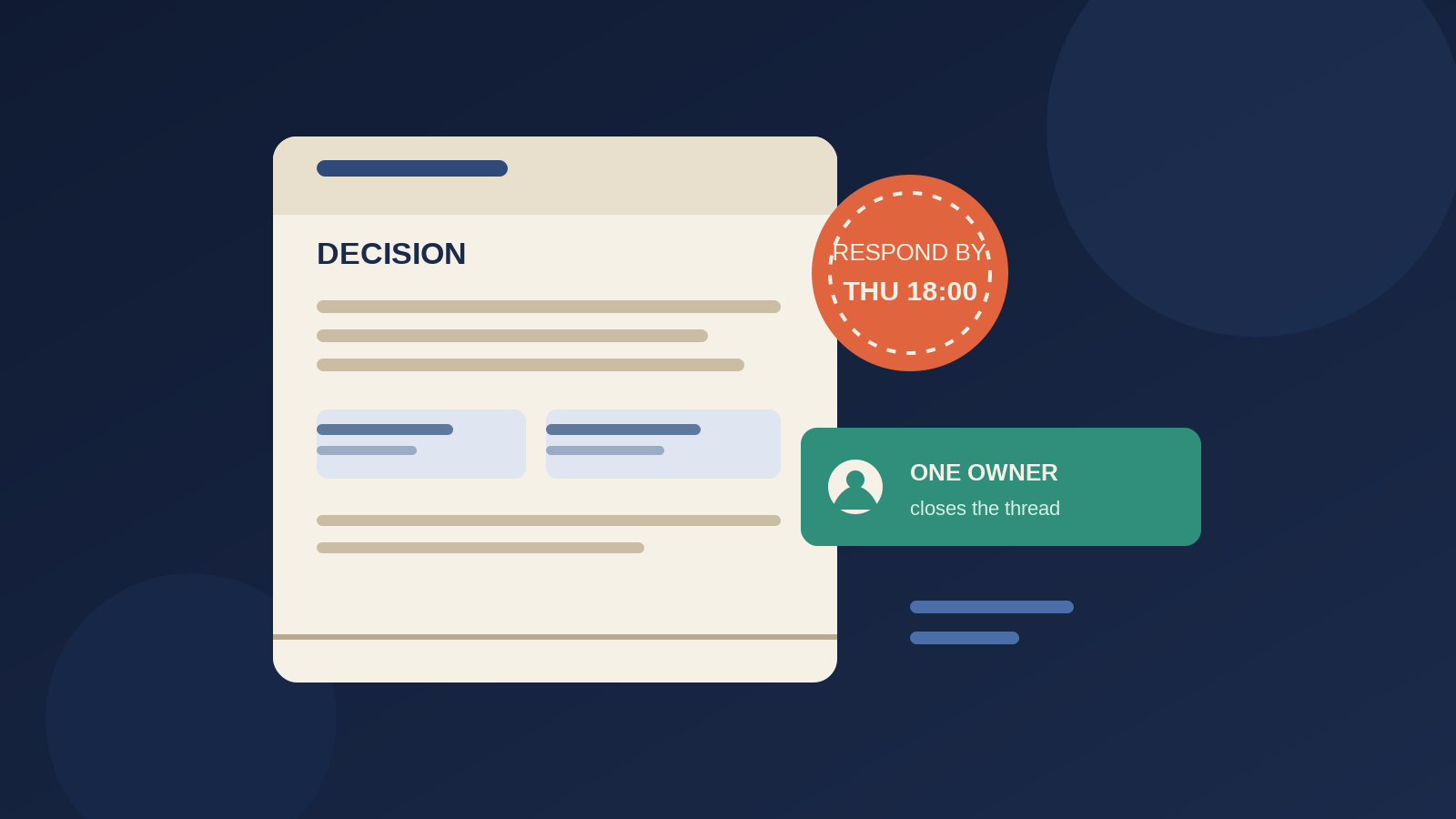
Granola’s pre-scheduling checklist opens with a question that most calendars cannot answer: does this meeting have a specific decision attached to it? A purpose written as a topic (“weekly sync”) invites drift. A purpose written as a decision (“choose which of the three onboarding flows ships in December”) gives the facilitator something to end on.
If the honest answer is that the meeting exists to share status, that is a real need, but a meeting is the expensive way to serve it. Asana’s guidance is blunt on this point: if everything on the agenda could travel asynchronously, cancel the call and send the written message instead. Asana
Do the arithmetic on attendee hours
Fourteen people for thirty minutes is seven hours, every week, before you count the context switching on either side. Fifty weeks makes three hundred and fifty hours, which is roughly nine working weeks of a single person’s year, spread thinly enough that no one feels responsible for it.
That number is the argument, and it is worth writing down in the audit. When a meeting is measured in hours per year rather than minutes per week, the question changes from “is this annoying” to “what else could nine weeks buy.” Range cites MIT research putting senior managers at roughly twenty-three hours of meetings per week and non-managers near six, with another study finding meetings consume about a fifth of total work hours. A recurring block that has lost its decision is a quiet, permanent withdrawal from that budget. Range
Send the pre-read twenty-four hours ahead, or admit there is nothing to read
The strongest single change available to a recurring meeting is a written pre-read that lands a day early. It moves context off the call and leaves the live time for the part that genuinely needs faces: disagreement, negotiation, and the moment a decision gets made in front of witnesses.
Granola’s audit asks whether a written pre-read would fail to replace the conversation. That inversion matters, because it forces the organizer to name what only a live call can do. If the answer is “nothing,” the meeting is a distribution channel for text. If the answer is “we need to argue about the tradeoff and leave with one option,” the meeting has earned its slot and the pre-read should set the argument up. Granola
Name one owner and one time box per item
An agenda without owners is a list of nouns. An agenda with owners but no clock is a list of nouns with names attached, and it will still run long. Each item needs a named person who speaks first and a number of minutes that the facilitator enforces out loud.
The disciplined version puts the hardest item first, while attention is intact, and keeps the routine updates at the end where they can be cut without losing the substance. Teams that reverse this order spend the first twenty minutes on status and the last ten rushing the decision that the meeting was called to make.
Reserve the final segment for decisions and owners
Granola’s template ends with two tables, one for decisions with an owner and a due date, and one for actions in the same shape. This is not bureaucracy; it is the difference between a meeting that ends and a meeting that concludes. A conversation that produces agreement in the room and no record of who does what has produced a pleasant hour and a future round of the same conversation.
In an audit, read the last month of these tables, if they exist. If they do not exist, that absence is your finding. A recurring meeting with no decision log is a meeting whose value cannot be checked, which is the same as a meeting whose value cannot be defended.
Check who is actually in the room
Count the attendees against the people who spoke in the last three sessions. A name that appears on the invite and never in the transcript, the notes, or a decision is either a required witness or an audience member, and those are different costs. Required witnesses stay because a decision needs their consent or their budget. Audience members should get the notes instead.
The same test applies to attendees who dial in from another time zone at an inconvenient hour. If their presence is a ritual rather than a contribution, remove them from the invite and send the written outcome instead.
Four verdicts, one sentence each
The audit ends in one of four outcomes, and the point of having four is that “keep it as is” stops being the default.
Keep: the meeting has a decision attached, the right people attend, and the pre-read arrives early. Change nothing except the end time.
Shorten: the decision is real but the meeting carries status updates and announcements that could travel in writing. Cut the length by half and move the routine material to the pre-read.
Convert: there is no decision, only a recurring need to inform. Replace the call with a written brief, published on the same cadence in the same channel, with a comment window of one business day.
Retire: the project is over, the decision belongs to a smaller group, or the meeting duplicates a channel that already works. Cancel it, note the date and the reason in the team’s written record, and tell the attendees where the work now lives.
Whichever verdict you choose, write it in the invite description with the date of the next audit. A meeting that has been reviewed and renewed is a different object from one that has merely survived.
Rerun the audit on a schedule
Quarterly is enough for most teams, and it should be attached to something that already happens, such as the monthly retrospective or the start of a planning cycle. Put the four verdicts in a shared document with one line per recurring meeting, and let the list do the arguing that individuals would rather avoid.
The subtle benefit of auditing on a schedule is that it separates the question from any single person’s annoyance. Nobody has to say that the Tuesday call is pointless. The audit asks the same seven questions of every meeting, and the answers do the work. Teams that adopt it usually find two or three blocks they can convert or retire in the first pass, which returns more hours than any productivity tool will ever offer.
Reserve twenty minutes a quarter. Ask for the decision, count the hours, demand the pre-read, read the decision log, and then choose one of four sentences. The meeting you keep on purpose is worth more than the ten you keep by default.